

Click on entry below to expand
Sencha
Probably Japan’s most famous tea, both on the island and abroad. It is estimated that 80% of all tea in Japan is made into sencha. It is often extremely rich in vitamins and amino acids. It can be a little astringent, but this is a revered quality in Japan as it signals the presence of healthy catechins.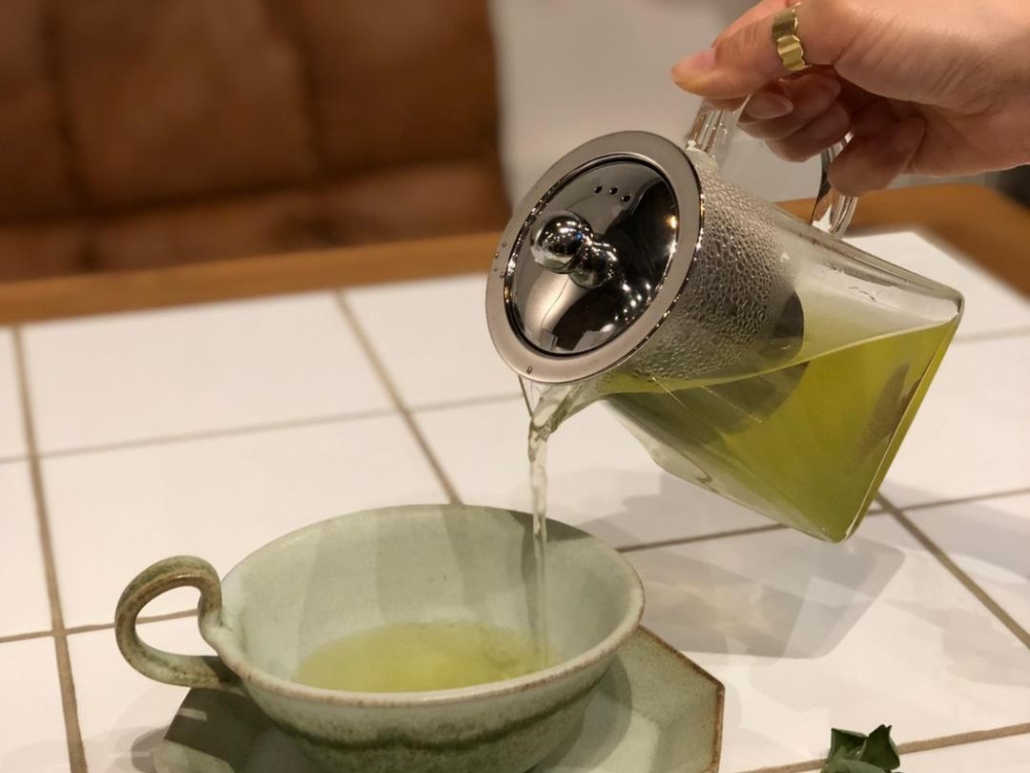
Shincha
First flush sencha
Bancha
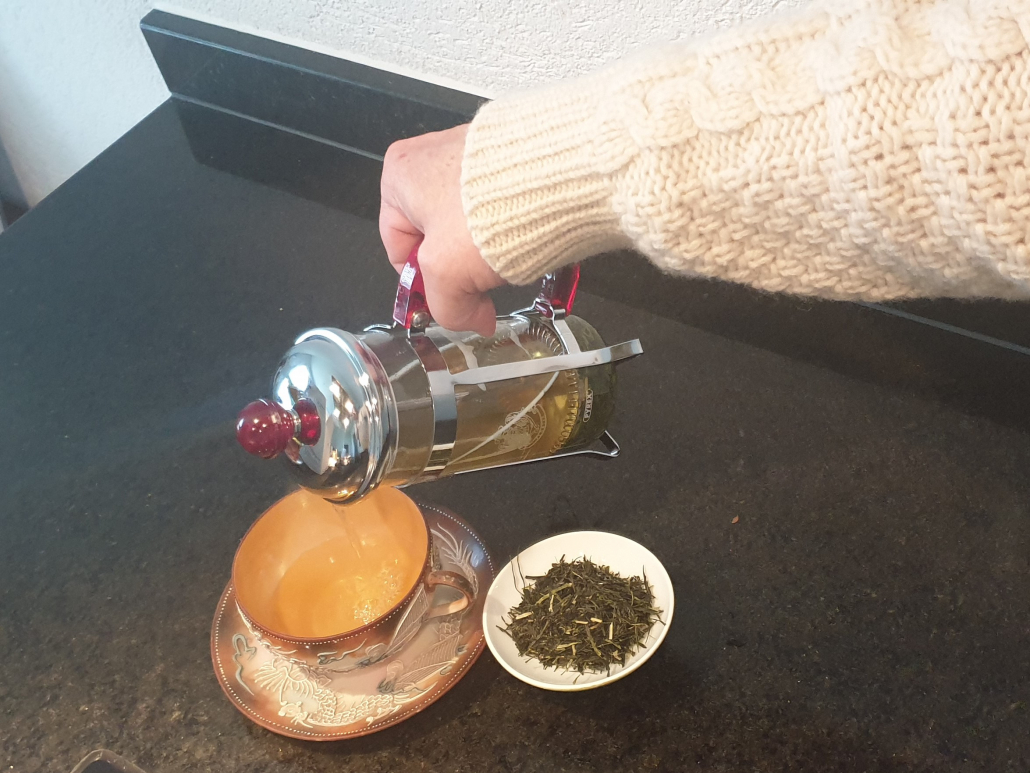
Like sencha, but harvested later (usually summer to autumn).
Genmaicha
Bancha mixed with roasted rice. (Legend has it that Genmai-san, who accidentally dropped a few grains of rice into his samurai master’s tea had his head chopped off for this mistake).
Gyokuro
Tea leaves are shaded for about three weeks, which leads to a higher content of amino acids and thus a sweeter drink. Gyokuro translates as Jade Dew, which in itself signals how precious this kind of tea is.
The plants for gyokuro tea are typically shaded with reeds and straw about 60cm above the plucking table for 21-30 days.
Kabusecha
Tea leaves are shaded for 10-14 days to increase umami flavour.
Houjicha
Roasted bancha. A more intense flavour can be obtained with leaves from a picking later in the season.
Kukicha
Made from tea leave stalks, often from a first flush sencha, but usually from a lower grade tea leaf. (Also see www.TheSwissTeaSommelier.ch: Karigane)
Despite the absence of tea leaves, this kind of tea is surprisingly intense in flavour.
Karigane
Like kukicha, karigane is stem tea (twig and stem) and as such a by-product, albeit a much appreciated one. For karigane, only the stems of gyokuro and high-grade sencha leaves are used. According to Hibiki-an, the stems make about 5%-10% of the leaf material.
Karigane is much cheaper than its respective leaf tea, but because it is richt in theanine, it is a naturally sweet tea.
Also see Hibiki-an: Karigane and www.TheSwissTeaSommelier: Kukicha
Mugicha
Made from roasted barley, and hence despite the -cha suffix technically not a tea. Toasty, herbal flavour with hints of caramel.
Fukamushicha
Japanese green tea is steamed for about 20s to stop oxidation process. If steamed for an additional 10s, it becomes so-called “deep steamed tea”. Fukamushicha is sweet, but the steaming process also render the leaves extremely brittle. Unfortunately, the effect is that all the small particles make it look like a cheaply processed tea, and unless a very fine mesh is used, a lot of these particles will end up in the liquid.
Aracha
Translates as “unfinished tea”. Aracha often designates tea leaves that have not undergone their full transformation process. There is, however, a market for aracha drinkers in Japan as there is a market for cookie dough eaters in the US.
Tencha
Tencha leaves are unkneaded gyokuro leaves that are free from stems and veins. Tencha is often ‘aged’ in special containers before the leaves are ground into matcha (on matcha stone mills at around 40g per hour).
Even though tencha is a pre-matcha product, it is possible to brew tencha as a leaf tea.
Konacha
Japanese green tea powder (fannings or dust) often served at restaurants. Konacha is a by-product of Gyokuro and Sencha and as such less expensive than high-grade tea leaves but still of excellent taste.
Tea plays a central role in Japanese culture. Yet, while the general interest in tea is growing in Switzerland, the interest among young people in tea in Japan (where service, quality and attention to detail in all things tea has had so much more time to evolve and has become so much more elevated) is waning. So much so that French Marie Roux found herself introducing Japanese tea to young Japanese in Japan after an internship at the Wazuka-based tea farm Obubu (Obubu homepage here. Obubu events here).
For a Kyodo News article on Marie Roux’s endeavour see here: French Connoisseur Looks to Stir Japanese Interest in Native Teas.
Contact & About

Send a Message
